This is where I share my kitchen adventures; a place where I can plan and celebrate my culinary exploits.
Thursday, 30 May 2013
Light Hollandaise
I'm as fond of the densely rich, buttery indulgence of good hollandaise as the next person. Hollandaise is a sauce that at this time of year, when the asparagus season is in full swing, comes into its own. My version however is a bit kinder if weight gain is an issue and I think it's safe to say now I'm well into my sixties, it is. I make the whole thing in a saucepan on the lowest heat, I never find it particularly difficult so I would encourage you to be brave enough to try it. If you have an electric hob where heat control is less immediate than gas, simply be prepared to slide the pan off the heat if you feel it's all getting too hot.
To make this hollandaise you will need;
4 egg yolks
200g of unsalted butter, cubed
200ml of water
100ml of white wine vinegar or lemon juice
1 teaspoon of Marigold bouillon powder or 1/2 teaspoon of salt
A pinch of pepper
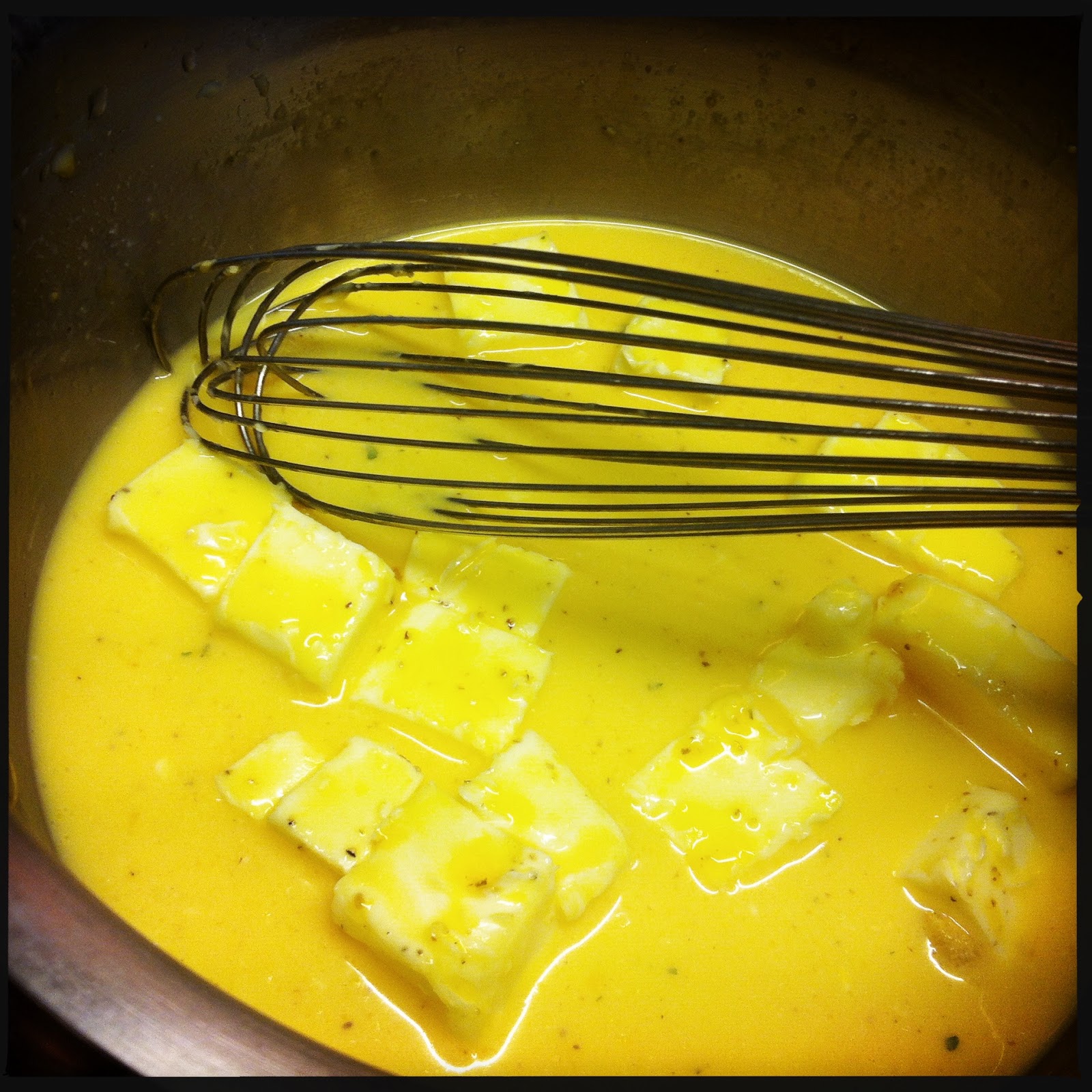
Place all the ingredients in a medium size saucepan, place on a low heat and whisk gently while the mix slowly heats up. you will find the butter begins to melt and when it is fully melted it's a good sign that the liquid is getting up to temperature. Being careful to whisk well, accessing every part of the base of the pan continue until the sauce begins to thicken, it should take less than a minute to complete thickening, so be watchful. The texture of this version of hollandaise is lighter and a little foamy, perfect for draping over lightly cooked asparagus or a fillet of salmon. This quantity makes sufficient for 6 servings.
Notes:
Tarragon vinegar is a good alternative.
I find spreading it cold on toast or a toasted English muffin makes a really good base for poached eggs.
This of those wonderful meringues or macarron you can make with the egg whites
Squid Ink Spaghetti with Prawn and Vodka
I know it's only black, but the colour of this spaghetti always makes the dish a delight. I can't imagine marrying it up with anything other than prawns or mussels, something from the sea. This sauce has a little vodka in it which though subtle, does bring an edge to the finished dish.
For the sauce you will need;
400g of raw prawn
1 small onion or a banana shallot, finely chopped
2 cloves of garlic, finely chopped
1 tablespoon of olive oil
2og of unsalted butter
200ml of white wine
2 tablespoons of chopped tomatoes, (I used tinned)
2 tablespoons of creme fraiche
2 tablespoons of vodka
1 teaspoon of salt
1/2 teaspoon of black pepper
1/2 teaspoon of cayenne pepper
1/2 teaspoon of sugar
A few strands of saffron
chopped chives to garnish
Have a large pot of water heating to boil the pasta.
Begin by slicing the prawns lengthways, this allows you to de-vein the prawns but also the smaller size pieces makes eating the dish that much better. Begin cooking the pasta, follow the packet instructions but it's usually around 10 minutes, enough time to cook the sauce. In a large pan fry the onion and garlic in the olive oil and butter until they become translucent, about 3 to 4 minutes on a gentle heat. Add the wine and vodka and cook until nearly all the liquid has reduced, add the tomatoes, sugar, saffron, creme fraiche and seasoning and continue to cook for a further 3 minutes, finally add the prawns and cook through for a couple of minutes, just until they turn pink, drain the spaghetti, reserving 1/2 cup of the cooking water to slacken off the sauce if needed, I usually find it does and the slightly starchy hot water of the pasta cooking is perfect. Turn the drained pasta into the sauce, stir through briefly to ensure the sauce is evenly distirbuted and serve with a garnish of chopped chives.
Monday, 27 May 2013
Old Hagbech Negroni
Really there is nothing new or different about my negroni, so it's a bit of a cheek calling it the Old Hagbech Negroni, in my defense however, I think there are many mediocre versions out there and the quality of this one is entirely down to the named brand ingredients.
For this cocktail you will need;
50ml Plymouth Gin
40ml Antica Formula (sweet vermouth)
40ml of Campari
2 large ice cubes
2 slices of orange for garnishing
Place the gin, sweet vermouth and campari in a glass, I use a single old fashioned, along with the ice and stir for half a minute, pop in a couple of slices of orange and a straw and serve.
Old Hagbech Lemon Posset
Lemon posset is one of the oldest desserts here in the UK, harking back to the middle ages. It is the simplest of things to put together and unlike it's Italian cousin, panna cotta which as its name implies is also made of cooked cream, it has a creamy texture rather than a set one.
I like to utilise the peel always when using lemons, why discard a source of such good flavour and I also believe the addition of the lime juice adds to the finished dish. Double cream is not available in the US as far as I am aware, the heavy cream that is sold there contains between 20 and 25% less fat than the double cream sold in the UK, I cannot therefore be certain that substituting the US heavy cream in this recipe will work.
For this recipe you will need;
700ml of double cream
200g of sugar
The juice and peel of 3 lemons
The juice of 1 lime
Begin by paring the thinnest layer of peel off the lemons, be careful not to include any of the bitter white pith. Place it along with the cream and sugar in a heavy based pan and slowly bring up to the boil. Whist stirring continuously, continue to cook the cream on the lowest heat for 3 minutes, it will appear slightly foamy, you need to watch that it doesn't boil over or catch on the bottom of the pan. Take the cream off the heat and strain out the peel, add the juice of the lemons and the lime and mix well before pouring into 6 small containers. Lemon posset requires a good 6 hours in the fridge to firm up, so this is not a last minute dessert.
Asparagus and Cheese Fondue Pizza with a Biga
Increasingly I find the quality of a pizza crust is improved no end by making the dough with a biga. I simply add half the yeast I would normally use, in this case 3 to 4 grams of fast action yeast, all of the water and enough of the flour to make a very thick batter, just before going to bed; in the morning I am greeted by a very healthy looking ferment with which to make the dough.
When it's asparagus season, here in Norfolk and cheese fondue was on the menu the night before, I think combining the two to make a pizza topping makes complete sense.
For this recipe you will need:
For the base
Half a packet of fast action yeast
500ml of water
700g of strong white bread flour
12g of salt
2 tablespoons of olive oil.
For the topping;
300g of grated mozzarella
300g of left over cheese fondue
400g of blanched asparagus
A little olive oil
Begin the night before by making the biga as described above. Leave overnight to ferment; in the morning add the remaining flour, salt and olive oil and knead until you have a smooth elastic dough. Leave to rise in a cool place, stretching and folding every hour. I find the dough is happy enough in this state for a good 6 hours but that's because I can keep it relatively cool. Transfer the dough to the fridge in order to suit you own timing, taking it out of the fridge 4 hours before you need to cook the pizzas. Divide the dough, this quantity make 4 medium size pizzas, and leave for an hour before stretching them out into a large thin round, placing on a pizza stone heated in a hot oven, 240C and placing on your topping. Drizzle with a little olive oil and cook for 7 to 10 minutes.
Notes:
I have taken to placing a few oak shavings on a sheet of kitchen foil in the bottom of my oven when I switch it on, the shavings begin to smoke as the pizza goes into the oven and the result is the distinctive flavour you get from a traditional wood fired pizza oven, sadly domestic ovens can't achieve the high heat of these ovens so the result is not exactly the same.
Subscribe to:
Posts (Atom)